
AI
Multi-Agent AI Systems: How Independent Agents Work Together to Solve Complex Tasks
July 26, 2026
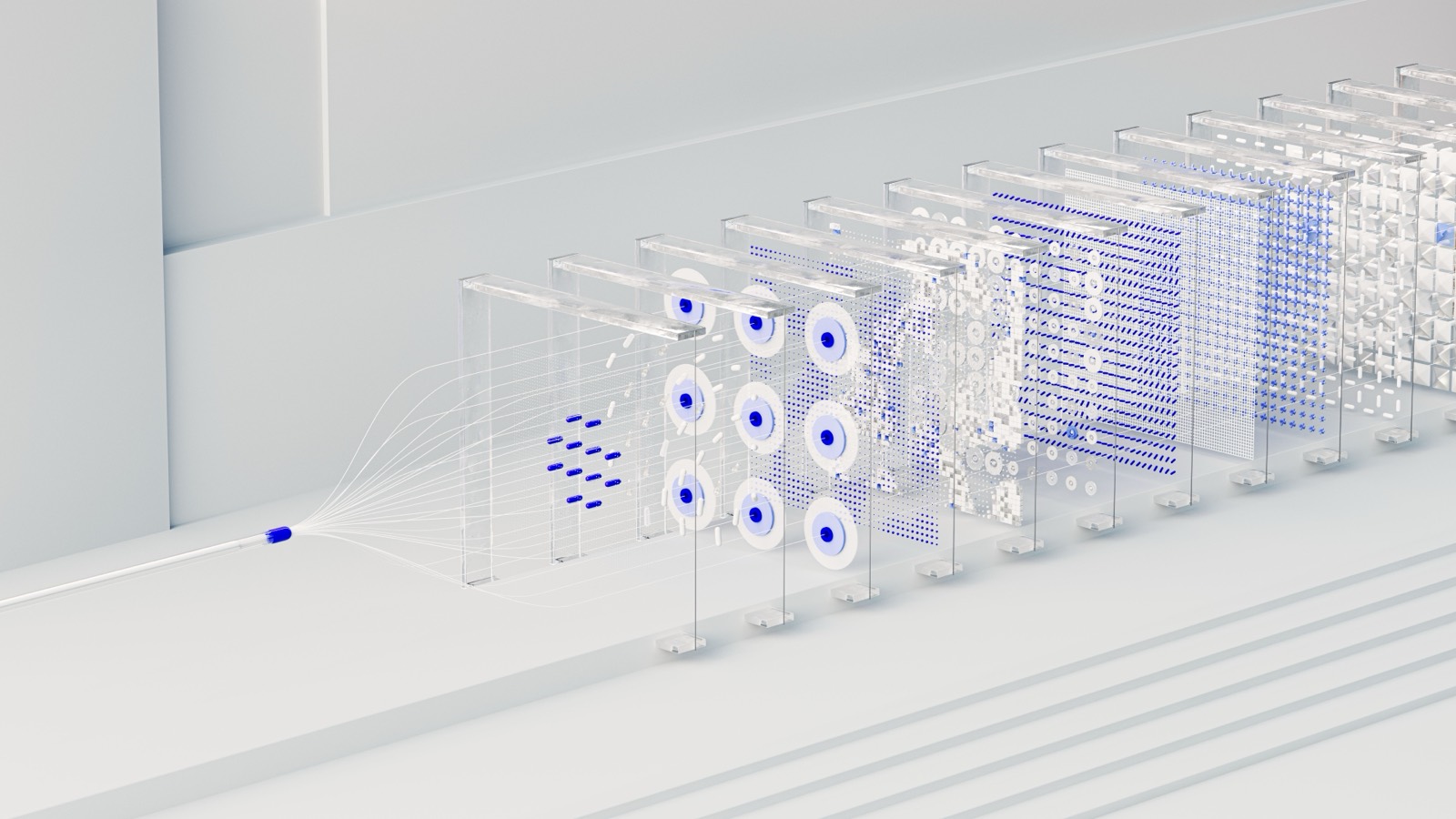
A single model answers a question. A team of specialized agents gets work done. Here's how independent AI agents talk to each other, coordinate, and tackle problems too big for one prompt — and what it means for the enterprise.
For the last few years, "using AI" mostly meant sending a prompt to a single model and reading what came back. That works well for a self-contained question. It breaks down the moment the task is big — the kind of work that needs research, several steps, tools, judgment, and checking. That's where multi-agent AI systems come in: instead of one model doing everything, you coordinate several specialized agents that each own a piece of the problem and hand work to one another.
What is an "agent," really?
An AI agent is more than a model. It's a model plus three things:
- A goal — a specific job it's responsible for ("find every invoice missing a PO number," "draft the migration plan").
- Tools — the ability to act: call an API, query a database, run code, read a document, send an email.
- Memory & context — what it has learned so far, and what it's allowed to see.
Give one model a goal, tools, and memory and you have a single agent. Give several of them different specialties and a way to communicate, and you have a multi-agent system — closer to a small team than a chatbot.
How agents talk to each other
The interesting part isn't the individual agents — it's the coordination. A few patterns do most of the work:
- Orchestrator and workers. A lead agent breaks a task into sub-tasks, hands each to a worker agent, and stitches the results back together. This is the most common shape, and it maps neatly onto how a manager delegates.
- Pipelines (hand-offs). Each agent does its stage and passes its output to the next — research → draft → review → format. Order carries meaning.
- Debate and critique. One agent proposes, another tries to poke holes in it, and a third decides. Adversarial checking catches mistakes a single confident model would sail past.
- Shared workspace. Agents read and write to a common "blackboard" — a shared document or state — so they can build on each other's work without talking directly.
Under the hood, agents communicate through structured messages — not free-form chat, but typed requests and results (often JSON) so the receiving agent can act on them reliably. Emerging standards are formalizing this: the Model Context Protocol (MCP) gives agents a common way to reach tools and data, and agent-to-agent protocols define how one agent discovers and delegates to another. The direction is clear — from bespoke glue code toward interoperable agents that plug together.
Why it works for complex tasks
Splitting a hard problem across agents buys you four things a single prompt can't easily get:
- Decomposition. Big problems become a set of small, well-scoped ones — each far more likely to be done correctly.
- Specialization. A "SQL agent," a "compliance agent," and a "writing agent" can each be tuned, prompted, and equipped for exactly their job.
- Parallelism. Independent sub-tasks run at the same time, so the whole thing finishes in the time of the slowest branch, not the sum of every step.
- Verification. Separating the doer from the checker is one of the most reliable ways to raise quality — the reviewer isn't invested in the first answer being right.
Where this shows up in the enterprise
This isn't just a lab curiosity. Practical, revenue-adjacent uses are already here:
- IT & SAP operations — one agent triages an incident, another pulls logs and configuration, a third proposes a fix and drafts the change request.
- Finance & compliance — agents reconcile transactions, flag anomalies, and assemble an audit-ready trail, each specialized to a jurisdiction or system.
- Data & migration work — a fleet of agents profiles source data, maps fields, and validates the result in parallel across thousands of records.
- Recruiting & staffing — an agent screens inbound resumes against a role, another matches bench talent to open requisitions, a third drafts the client submittal.
The common thread: work that used to require a person to hold many things in their head at once, now decomposed across cooperating agents with a human reviewing the output.
The hard parts (worth going in with eyes open)
Multi-agent systems are powerful, not magic. The real challenges are engineering ones:
- Coordination & cost. More agents means more model calls. Without discipline, you can spend a lot of tokens to reach an answer a single well-designed step could have produced.
- Reliability. Errors compound across steps. Strong systems verify aggressively, retry deliberately, and fail loudly rather than quietly guessing.
- Guardrails & permissions. An agent that can act needs tightly scoped access — read-only where it should be, human approval before anything irreversible.
- Observability. When something goes wrong across ten agents, you need to see exactly what each one did. Logging and tracing aren't optional.
The takeaway
The shift from single-model prompts to coordinated agents is the same shift every growing operation makes: from one generalist doing everything to a team of specialists who divide the work and check each other. Done well, multi-agent systems take on tasks that were previously too big, too multi-step, or too error-prone to automate — while keeping a human firmly in the loop on the decisions that matter.
At VectorVue, we help enterprises figure out where agentic AI actually earns its keep — and, just as importantly, where a simpler approach is the smarter call. If you're exploring how AI fits into your SAP, IT, or operations stack, let's talk.
Have a project like this? Talk to our team →